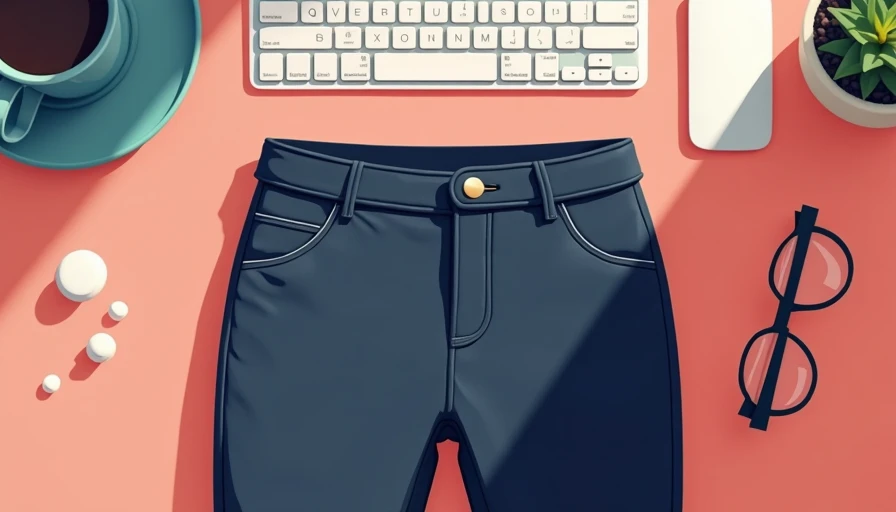
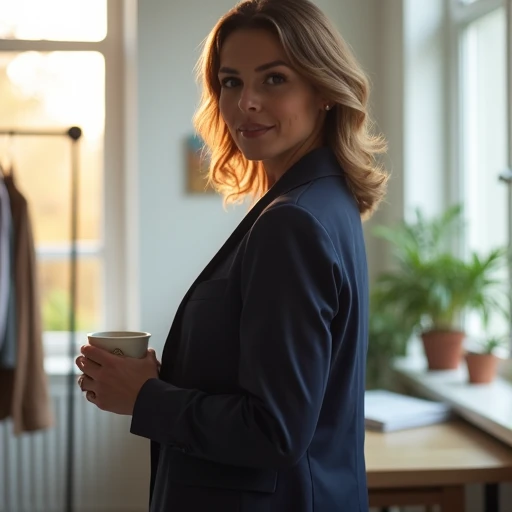
Tuesday, 9:45 a.m., and I am sitting in a client lobby wondering whether my waistband is going to become the most memorable part of the meeting. I learned the hard way that business casual pants women actually wear need to do more than look polished on a hanger. They need to survive a commute, a conference-room chair, a quick lunch, and the moment you reach for a folder on a high shelf. Good clothes, no drama.
After 14 years in bank branches and client-facing offices, I stopped buying trousers for an imaginary version of my workday. The best pair has a clean line, enough room to move, and fabric that does not require constant attention. You do not need a closet full of options. Three reliable pairs in different weights and colors can carry most of a workweek.
What Makes a Pair Truly Business Casual
Business casual sits between formal suiting and everyday weekend clothing. The exact line depends on your workplace, but a useful pair usually has a finished waistband, a modest rise, a smooth front, and fabric with enough structure to hold its shape. Tailored does not mean tight. It means the pants look intentional when you are standing, walking, and sitting.
For most offices, start with black, navy, charcoal, or a medium neutral such as camel or taupe. These colors work with blouses, knit tops, cardigans, and blazers without creating a complicated morning decision. A subtle check or pinstripe can also earn its place, especially when the rest of your outfit is quiet.
Pay attention to the details people notice without realizing it. Pockets should lie flat, the fly should stay closed when you sit, and the hem should not drag under your shoe. If you can pull the waistband several inches away from your body or you are tugging it up every time you stand, the cut is not serving you. A tailor can often fix the hem or waist for $15 to $45, which is cheaper than abandoning a $90 pair.
The Best Cuts for Real Office Days
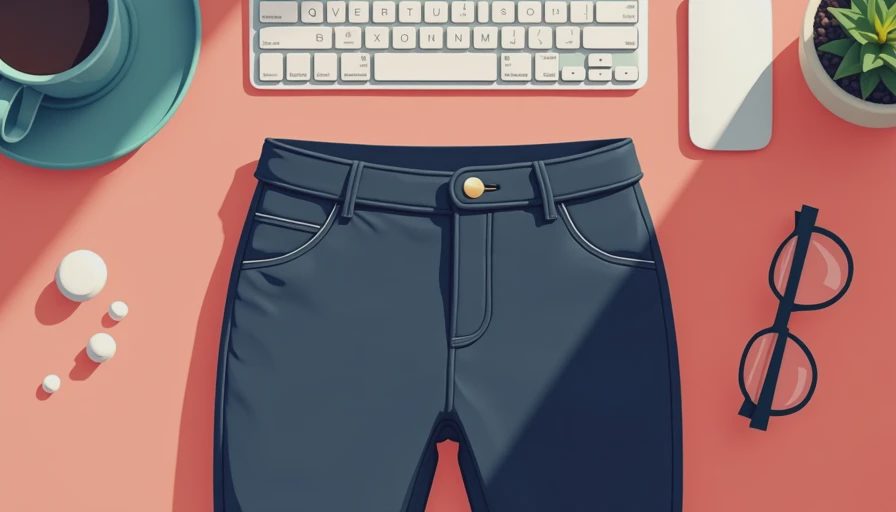
Straight-leg pants are my most dependable recommendation. They fit comfortably through the hip and thigh, then fall in a nearly even line to the ankle or shoe. That shape works with loafers, low heels, ballet flats, and clean sneakers in offices where sneakers are accepted. It also looks composed when you are seated across from a client.
Wide-leg pants can be excellent business casual pants women reach for when the fabric drapes well. Look for a waistband that sits smoothly and a leg that begins widening from the hip rather than ballooning abruptly. A tucked blouse and shorter cardigan keep the outfit from feeling overwhelming. With wide legs, the hem matters more than ever; it should skim the top of your shoe rather than puddle on the floor.
Ankle pants are practical for warmer offices and commuting. A finished hem that lands just above the ankle works nicely with loafers or a low block heel. Cropped pants should not look accidental, though. Pair them with a shoe that shows a little foot and avoid stacking several short proportions at once, such as a cropped jacket over a very short top.
Slim-straight pants offer a neat line without the cling of leggings. They are useful under a longer blazer and easy to wear with a tucked-in button-down. If your office is conservative, skip denim-looking finishes, cargo pockets, exposed zippers, and very stretchy ponte unless your dress code clearly allows them.
Fabrics That Earn Their Cost Per Wear
Fabric determines whether you enjoy wearing a pair or spend the day negotiating with it. A wool blend is a strong choice for cooler months because it resists wrinkles and has enough body for a professional silhouette. A pair costing $100 that you wear twice a week for six months is already close to $2 per wear, the kind of math I kept in my phone during my branch-manager years.
Stretch woven fabric is another practical option. Two to four percent elastane can make sitting through a long meeting easier without making the pants look like athletic wear. Look for fabric that recovers after you bend your knees. If the knees remain baggy after one afternoon, the material is unlikely to become a wardrobe favorite.
For summer, try a cotton blend, lightweight twill, or washable blend with a little structure. Linen can look beautiful, but heavy wrinkling is not ideal for every client-facing setting. Polyester is not automatically cheap or uncomfortable; a well-made blend can wash easily and hold color. Read the care label before purchasing. Dry-clean-only pants often cost more than their ticket price because every wear adds an errand.
How to Build Five Outfits From Three Pairs
Imagine you own black straight-leg pants, navy ankle pants, and camel wide-leg pants. Wear the black pair with a pale blue shirt and gray cardigan on Monday. On Tuesday, use the navy pair with a cream knit top and brown loafers. Wednesday can be the camel pair, a black shell, and a short structured jacket.
On Thursday, repeat the black pants with a striped boatneck top and a blazer. Change the earrings and shoes rather than treating repetition as a failure. Friday's navy pants can work with a fine-gauge sweater and polished leather sneakers if your workplace permits them. The point is not to disguise the fact that you own clothing. The point is to make each combination feel deliberate.
This is where business casual pants women need to coordinate with the rest of the closet, not compete with it. Before buying a new pair, name three tops and two shoes you already own that will work. If you cannot do that, the item is probably asking you to build an entire outfit around it.
Fit Checks to Do Before You Buy
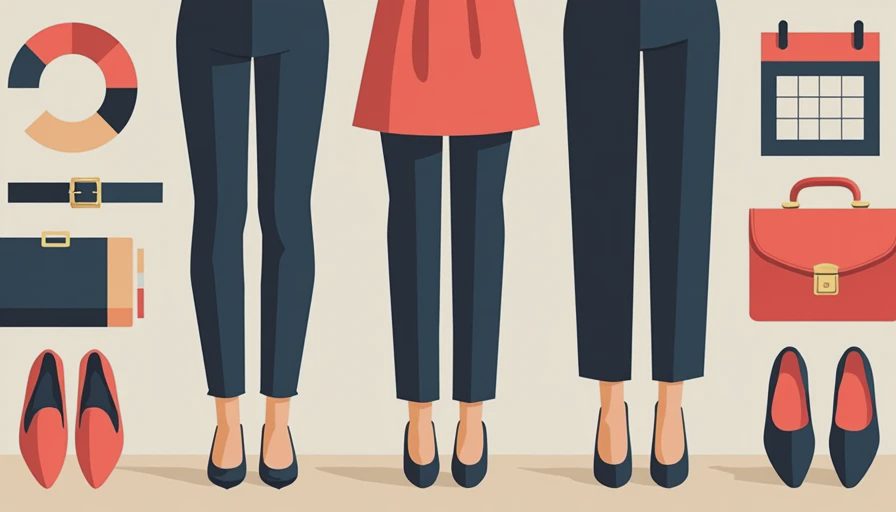
Try pants on while wearing the shoes you expect to use. Stand, sit, walk, and climb a few steps if the fitting room allows it. Check the side seam in a mirror and look at the back waistband after sitting. A waistband that gaps can often be altered, while fabric that pulls across the front usually needs a different size or cut.
Check opacity in natural light when possible. Dark colors can still become transparent when stretched. Put your phone, keys, and access card in the pockets to see whether they distort the line. For a work pair, pockets should be useful but not so bulky that they change the shape of the hip or thigh.
Consider the rise in relation to your tops. A mid- or high-rise pair can stay covered when you sit and makes a tucked shirt easier to manage. A lower rise may work well with longer untucked tops, but it can require more adjusting during a busy day. Neither option is universally correct; the right choice is the one you forget about after getting dressed.
A Simple Shopping Plan
Start by checking what is missing rather than browsing every new arrival. If you have two black pairs but nothing comfortable in navy or charcoal, solve that gap first. Set a realistic budget: around $50 to $80 can find useful options at many retailers during sales, while $100 to $200 often buys stronger fabric, better lining, or more consistent construction. Price alone does not guarantee a better fit.
When you bring a pair home, test it during a normal evening. Sit at the kitchen table, walk around, and wear the intended shoes. Remove the tags only after you know the waistband, pockets, and hem behave well. Keep a note of cost per wear, as I do. The pair that feels ordinary on a hanger but gets worn every week is usually the smartest purchase.
The actionable takeaway is simple: choose one neutral pair with a straight or slim-straight cut, test it sitting down, and match it with three tops already in your closet. That is how business casual pants women become dependable workwear instead of another stressful shopping project.