
Tuesday morning, 8:10, coffee still hot, and you are already staring at a closet full of clothes that do not seem to belong to the same life. That is usually when how to build a capsule wardrobe for work stops sounding like a Pinterest project and starts sounding useful. I learned this in a bank branch where I had to look competent in five minutes or less, and I did not have time to debate every hemline. The answer is not more clothes. It is fewer pieces that all agree with each other, fit your job, and survive a long day in a desk chair, a car, or a client meeting.
How to build a capsule wardrobe for work without buying a whole new closet
Start with the week you actually live, not the fantasy week where every day is a polished photo op. If your calendar has two client meetings, two work-from-home days, and one office day, your wardrobe should support that mix. I tell women to pull out the pieces they wear on repeat and put them in one pile. If you keep reaching for the same navy blazer, black trouser, and soft blouse, that is your closet telling you what works. Build around those items instead of trying to force a style personality you do not wear on a Tuesday.
Color is the easiest place to make the whole thing work. Pick two or three neutrals that live well together, then add one accent color that makes you happy and does not fight with your skin or your commute. In real life, that might be navy, black, cream, and a soft blue, or camel, chocolate, white, and burgundy. The point is simple: every top should work with every bottom at least once. That is how a small wardrobe starts doing a big job.
I also like a rough ratio. Think in terms of three bottoms, five tops, two layers, two pairs of shoes, and one or two dresses if your office wears them well. That is enough variety to get through a workweek without feeling repetitive, especially if the pieces are not fragile. Ponte, wool blends, wrinkle-resistant cotton, and lined knits earn their keep fast. A blouse that needs special care every time it goes into the laundry is a hobby, not a workhorse.
The pieces that do most of the heavy lifting
The blazer is still the easiest shortcut to looking ready, but it has to fit like it belongs in your life, not on a hanger. It should close comfortably, skim the shoulders, and let you sit without fighting the button. Brands like J.Crew, Ann Taylor, Banana Republic, Talbots, and Brooks Brothers all make versions that can work, and you do not need the fanciest one. Around $120 to $250 is a normal lane for a solid blazer, and tailoring a sleeve or taking in the waist for another $20 to $45 often makes the whole thing look more expensive.
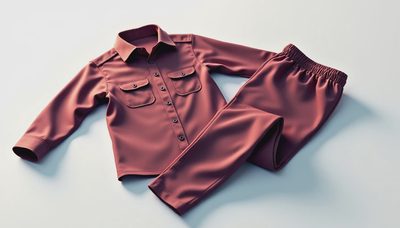
Your trousers matter just as much. A straight leg, slim ankle, or full-length trouser in black, navy, gray, or camel will do more for your wardrobe than three trendy pairs that only look right with one shoe. If your office is a little more relaxed, dark denim with a crisp hem can step in for a trouser on casual Fridays. For tops, look for shells, button-front shirts, fine-gauge knits, and a blouse that works tucked or untucked. I want pieces that can go under a blazer and still look fine if the blazer ends up over the back of a chair by 3 p.m.
Shoes should make a long day easier, not harder. A low block heel, loafer, polished flat, or clean ankle boot usually earns more wear than a heel you only like in theory. If you walk a parking lot, take stairs, or stand at a counter for part of the day, comfort is not a compromise. It is part of the job.

Put the outfits together before Monday morning
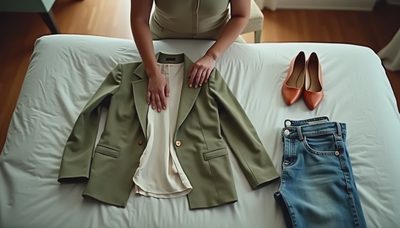
The best work wardrobe is not a pile of good pieces. It is a handful of outfits you can reach for without thinking. I like to build them on my bed before the week starts, the same way I used to lay out branch-manager outfits after Sunday dinner. Blazer, shell, trouser. Sweater, ankle pant, loafer. Button-front shirt, skirt, low heel. Knit dress, blazer, flat. Once you have six or seven combinations, the rest of the week starts feeling easier.
This is also where cost per wear stops being a cute phrase and becomes a real filter. If a $180 blazer gets worn 40 times, that is a better buy than a $60 top you wear twice because the sleeves are awkward or the neckline needs attention. I keep a note on my phone for pieces over $50, and if something gets below $2 a wear, I know it earned its space. That habit keeps me honest and keeps me from buying a duplicate just because it looked good under fluorescent store lights.
Shopping gets easier when you know what job the item has to do. If you already own two good black pants, do not buy a third because it was on sale. Spend the money on the gap that slows you down: a better blazer, a shirt that does not wrinkle, a knit dress that works for presentations and dinners, or a second pair of shoes that saves your feet. A capsule is supposed to solve mornings, not feed the closet.

Edit the closet like you mean it
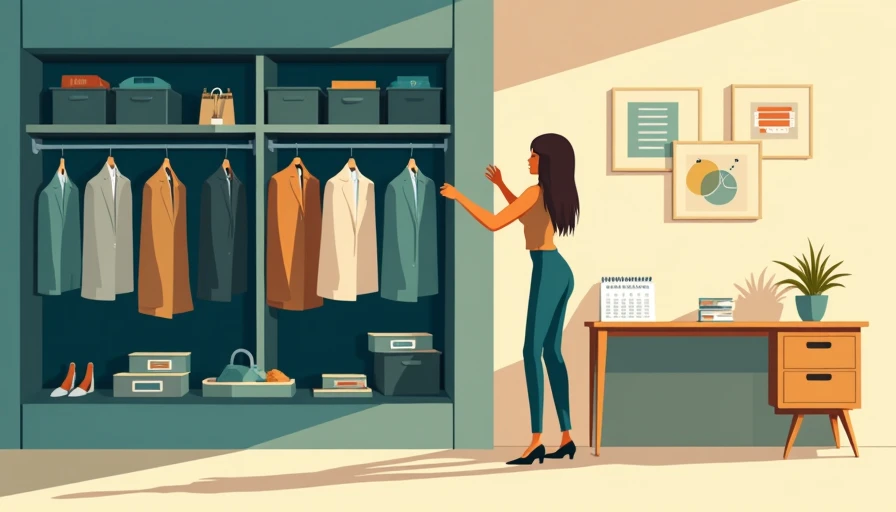
The fastest way to make room for better work clothes is to stop giving storage space to pieces that do not earn it. I use a three-question test: have I worn it in the last year, does it fit my current job, and can I get dressed in it without fidgeting all morning? If the answer is no twice, it goes in the donate pile. Not because it is bad, but because it is not working.
This is the part where women usually find out they own six versions of the same shirt and none of them are the one they actually want. That is useful information. It means you can stop shopping for the feeling of being organized and start shopping for the exact piece that solves the gap. If your office is casual, you may only need one blazer and one sharp cardigan. If you are client-facing, you may want two blazers, three pants, and a couple of polished tops that can rotate without anyone noticing.
The goal is not a tiny closet for bragging rights. It is a small, reliable system that makes your mornings quieter. Once you know how to build a capsule wardrobe for work, you stop dressing for the closet you wish you had and start using the one that pays off in real life. Good clothes, no drama.