

Tuesday, 9:45 a.m., client lobby, and I can tell in about six seconds whether an outfit is going to help a woman or irritate her all day. That is why creating a capsule wardrobe for work matters. It is not about having fewer clothes for the sake of minimalism. It is about getting dressed fast, looking steady in a conference room, and not standing in front of a closet full of good intentions that never turn into an outfit.
The women I worked with at Wells Fargo did not need a style overhaul. They needed a smarter short list. A few pieces that mixed cleanly, survived sitting, and did not make every morning feel like a small crisis. Good clothes, no drama.
The first step in creating a capsule wardrobe for work is choosing one lane
The first step in creating a capsule wardrobe for work is picking a color lane and staying in it long enough to let the pieces do their job. I like navy, black, charcoal, cream, soft white, and one quiet accent like camel or light blue. That gives you enough range for a full week without making every outfit look like it came from a different closet.
In a real office, color is not just a style choice. It is a speed choice. If your blazer works with three tops instead of one, you are already ahead. If your shoes work with pants and skirts, you are not negotiating with yourself at 7:20 a.m. I have seen women spend more money on random pieces than they would have spent on a smaller, better plan. That is how the closet gets crowded and the mornings stay hard.
Think of the palette as your common language. Once the pieces speak the same language, you can stop overthinking and start rotating.
The 12-piece core I would build first
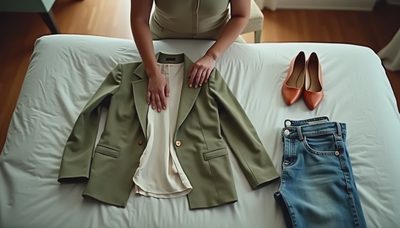
If I were building this from scratch, I would start with two blazers, two pairs of pants, one skirt or simple dress, four tops, one knit layer, and two pairs of shoes. That is enough to get through most office weeks without repeating the same formula over and over.
For the blazers, look at J.Crew, Ann Taylor, Talbots, or Banana Republic if you want easy-to-wear classics. For shoes, Cole Haan, Naturalizer, and Clarks usually understand that a working woman has places to go after 5 p.m. A good blazer might run $120 to $250 on sale, and a decent pair of leather loafers might land between $90 and $180. That sounds like a lot until you wear the same jacket 40 times. Then it starts looking smart instead of expensive.
This is where I keep my cost-per-wear note on my phone. If a blazer drops under $2 a wear, I feel fine buying coffee and calling it a win. That is the whole point: not owning more, but owning pieces that pay rent.

How the pieces work from Monday to Friday
Creating a capsule wardrobe for work gets easier when you plan outfits by the kind of day you actually have, not the kind of day you wish you had. A Monday presentation needs a sharper jacket and a blouse that does not pull when you sit down. A Wednesday full of calls can be a knit top with trousers and loafers. A Friday that starts with school drop-off and ends at a team lunch can handle dark jeans in a casual office, or a softer pant with a cardigan if your workplace is still business-friendly.
This is where many closets fall apart: the clothes are pretty, but they are not linked to the calendar. If your wardrobe cannot handle a client lunch, a rainy commute, and an indoor conference room with bad air conditioning, it is not really working for you. When the pieces are coordinated, you can dress for the job instead of dressing for the mirror.
I like to think in outfit formulas. Blazer plus trouser plus shell. Sweater plus skirt plus boot. Dress plus jacket plus loafer. Once those formulas are clear, getting dressed stops feeling creative and starts feeling efficient.
What to remove before you buy anything else
Before you shop, clear the duplicates that keep stealing space. Most women have three versions of the same black top, two pairs of almost-right pants, and one blazer that looked great in the fitting room but never feels right in the office chair. If a piece only works standing up, that is a clue.
I would also pull out anything that needs constant fixing. A cardigan that pills after two washes, a heel that makes you change your stride, or a blouse that shows every wrinkle will drain energy faster than you think. Work clothes should reduce decisions, not create new ones. You want pieces that still look composed after the drive, the desk, and the lunch meeting.
Once the closet is trimmed, the useful things become obvious. You can see which pants actually fit your life, which colors repeat naturally, and which shoes earn their place. That makes the next purchase easier and usually cheaper.

The shopping order that keeps you from wasting money
When people ask me where to start, I tell them not to buy the fun piece first. Buy the gap first. If you already have a great black skirt but no top that works with it, fix the top problem before you shop for another blazer. If your pants are fine but your shoes are making every outfit look unfinished, solve that first. The closet gets better when each new item has a job.
A simple order helps: first pants, then blazer, then tops, then shoes, then one dress or skirt if your workplace needs it. That keeps the budget focused. Even with a moderate budget, you can build something solid with four or five better pieces instead of ten random ones. I have watched women spend $400 on impulse and still feel underdressed. I have also seen a $700 reset turn into a wardrobe that works five days a week.
The goal is not perfection. The goal is to make Tuesday morning easier.
Sloane's take on keeping it useful
Creating a capsule wardrobe for work is really about matching your clothes to your actual life: your desk, your commute, your calendar, and the version of you that has to answer emails before coffee. If you start with a small color palette, a few reliable shapes, and pieces that mix without effort, you will wear more of what you own and stop shopping out of panic.
My best advice is simple: choose one blazer, one pair of pants, and one shoe that you already know you would wear next week, then build around those. That is the first move that makes the rest of the wardrobe easier.