

The Business Casual Woman: A No-Fuss Guide to Office Style
Tuesday, 9:45 a.m., the Wells Fargo lobby. A client is walking toward me and I'm tugging at a blazer that pulls across my shoulders. I'd dressed in a hurry, thrown on the same dark jeans and jacket I'd worn the weekend before. That moment is why I started asking the question I'd later build a blog around: what does a business casual woman actually need in her closet? Fourteen years of client meetings taught me the answer. You don't need a fashion degree. You need a handful of pieces that work together, a few rules, and the discipline to stop buying things that never make it out of the closet.
What Business Casual Means in a Real Office
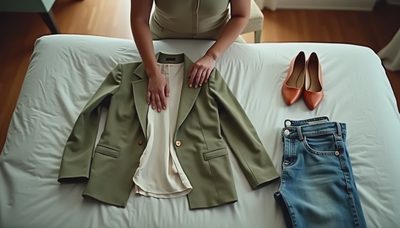
Calling something business casual is only half helpful. It sits between a suit and Saturday, and every office draws that line differently. For the business casual woman who meets clients or sits in on presentations, the safest bet is usually a blazer, trousers or tailored jeans, and a top that doesn't require a dry cleaner to survive lunch. The key is that any one piece can be slightly relaxed, but not all of them at once. A knit blazer with dark denim and loafers reads intentional. Yoga pants with the same blazer reads like you gave up before you got to work.
I learned this the hard way as a branch manager, watching women in the office overthink a dress code that was mostly in our heads. Most dress code problems aren't about the rules. They're about proportion. Does the jacket end at a flattering point on your hip when you're sitting across from a client? Do the pants break cleanly over your shoe? Those small details are what people notice, even if they can't name them.

Seven Pieces That Do the Work
After years of wardrobe consults, I've narrowed what a business casual woman really needs to seven pieces. You can mix them into more outfits than you'll ever need.
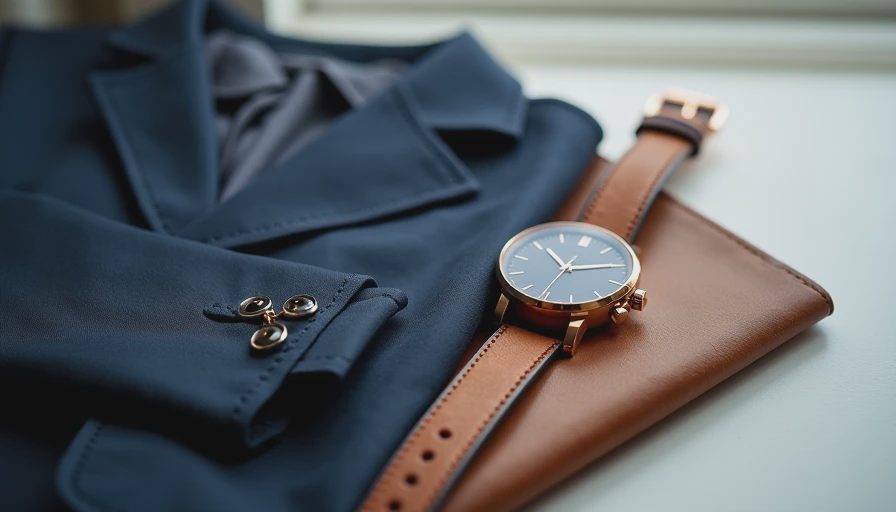
A well-fitted blazer. This is the workhorse. It fixes a plain t-shirt, covers a stain on your sleeve, and adds instant structure. Spend money here. A $150 blazer worn 100 times costs $1.50 per wear, which is cheaper than a $30 fast-fashion jacket you'll replace every season.
Two pairs of trousers. One in a neutral like charcoal or navy, one in a warmer tone like olive or taupe. Dark denim without rips works too, if your office allows it. Look for a mid-rise cut that doesn't gap at the waist when you sit.
Two tops that are not t-shirts. A silk-shell blouse or a cotton popover with a collar. If you hate ironing, buy wrinkle-resistant fabrics and hang them up the night before.
One pair of comfortable loafers or low-heeled ankle boots. Your shoes carry you through the day, and clients notice when you wobble. Save heels for the promotional meeting, not the 10 a.m. check-in.
One structured tote. It should close at the top, fit a laptop, and not read as pajamas when you're carrying it into a conference room.
That's the core. From these, you can build a week of outfits without thinking.
How to Build Outfits Without Overthinking It
Hang your work clothes in one section of the closet. Pull one bottom, one top, add the blazer. That's it. I call it the three-piece rule. If you need extra polish, add a scarf or a simple necklace. Avoid prints that compete with your face or patterns that make you second-guess yourself at the front door.
My cost-per-wear note on my phone has caught me more times than I want to admit. A $98 blouse worn three times is $32 a wear. A $140 silk blouse worn forty times is $3.50. The expensive piece becomes the cheap one. Buy for the years, not for the Friday afternoon when you want retail therapy.
Shopping Rules for the Business Casual Woman
The phrase I use when I help women sort through their closets is simple: good clothes, no drama. If you're a business casual woman who wants to stop wasting money, start here.
Plan around your real life. You'll shop better on a weekday lunch break than a chaotic Saturday. Go in with a list of gaps, not a list of wants.
Feel the fabric before you buy. If it's stiff or scratchy in the store, it will feel worse after eight hours. You want something that won't require a steamer at your desk.
Buy neutrals first. Then add color only if it complements your skin tone and your existing wardrobe. Navy, gray, cream, and black form the backbone of any work wardrobe.
Stick to two or three brands that fit you well. I'm not here to list them, because fit matters more than labels. Find a brand whose shoulder width and waist work for you, then read reviews for wrinkle resistance.
Settle for Nothing Less Than Good Clothes, No Drama
The real goal for any business casual woman is to walk into a room and focus on the meeting, not on whether your collar is lying flat. You want to open your wardrobe on Monday and find three complete outfits ready to go. You want to stop owning a closet full of almost-works and start owning a rack of actually-works.
Start by clearing out what never fits, never flatters, and never gets worn. Then rebuild with the seven pieces above. When getting dressed stops being a daily negotiation, you'll be surprised how much mental space you free up.
One takeaway to act on this week: pick one outfit you own and wear it twice in the same week. If it still makes you feel capable on the second wearing, you've found a keeper. If it doesn't, it's not a clothes problem. It's a costume problem, and you deserve better.
Being a business casual woman doesn't mean dressing like a cardboard cutout of a professional. It means having a small stack of clothes that make you forget about what you're wearing. That's the whole point. Good clothes, no drama.