

Tuesday morning, 8:10, and the closet is doing that thing where it looks full but nothing feels right. I know that moment well. The reason how to build a capsule wardrobe for contemporary work environments matters is simple: most working women do not live in one dress code anymore. We bounce from client meetings to Zoom calls to coffee runs to school pickup, and the clothes need to keep up without making us think too hard. A good capsule solves that. It gives you a small group of pieces that work together, look polished in daylight, and still feel like you after the second meeting of the day.
How to build a capsule wardrobe for contemporary work environments starts with your calendar
Before you buy anything, look at the actual week you live. If your job is mostly laptop time with a few in-person meetings, your capsule should lean softer and more flexible. If you spend days in front of clients, you need a stronger jacket and better shoes. If your office is casual but still public-facing, you want clothes that look intentional without feeling overdone. That is the real job of a capsule: not to prove you own less, but to make the right choice obvious when you are tired and moving fast.
I tell women to sort work into three buckets. First is the polished day, when you need to look ready for a manager, customer, or presentation. Second is the mixed day, when you may be in the office but also sitting in your car answering email. Third is the easy day, when the calendar is lighter but you still need to look like you belong in the building. Every piece in the closet should handle at least two of those buckets. If it only works for one, it is taking up too much space.
Pick a color story that makes getting dressed easier
A capsule gets a lot easier when the colors agree with each other. For work, I like a base of navy, black, charcoal, cream, and camel, then one or two softer accents like pale blue, olive, or burgundy. That mix handles most office settings without looking stiff. It also makes shopping easier because you can spot a true gap. If your closet is already heavy on black, a navy blazer or a warm camel sweater can open up more outfit combinations than another random print ever will.
This is also where people tend to overbuy. A pretty blouse in a one-off color can look great on the hanger and still fail if nothing else in the closet matches it. A capsule works best when you can grab one top and know it will go with three bottoms, two layers, and at least one shoe. That is less exciting than a rack full of novelty, but it is a much better deal when you are getting dressed at 7:15 on a Tuesday.
Choose the core pieces that do the heavy lifting
You do not need a giant wardrobe. You need a reliable one. For most office lives, I would start with one navy or black blazer, one softer jacket or cardigan, two bottoms in a clean cut, four tops, one dress, and two pairs of shoes that you can actually walk in. Think straight-leg trousers, ankle-length pants, a knit shell, a button-up or fluid blouse, a fine-gauge sweater, and a simple midi dress that works with flats or a blazer. Those pieces can make a dozen outfits before you start repeating in a way anyone notices.
Fabric matters more than people think. Ponte, wool blends, and structured knits travel well, sit well, and usually look better at 4 p.m. than shiny synthetics do. If you are shopping on a middle budget, brands like J.Crew, Banana Republic, Ann Taylor, and Spanx often have polished work pieces, while Quince and Uniqlo can be good for layers and basic tops. You do not need everything from one place. You need pieces that behave in real life.

What how to build a capsule wardrobe for contemporary work environments looks like on a real Tuesday
This is where the whole thing proves itself. A good capsule should let you get dressed for a day with a client meeting, a lunch errand, and an unexpected Teams call without changing clothes three times. That means the blazer should close comfortably, the pants should not fight you when you sit down, and the top should stay neat after you lean over a laptop. If a piece wrinkles badly, rides up, or needs constant tugging, it will not earn its place, no matter how pretty it looked in the dressing room.
The best work clothes have a quiet kind of stability. They let you move through your day without thinking about your hemline or whether your shoulders feel boxed in. That is the real test of how to build a capsule wardrobe for contemporary work environments: if you can sit, stand, and walk into a meeting without tugging at your clothes, it works. Good clothes should help your brain stay on the work, not the waistband.
Shop the gaps with cost-per-wear in mind
This is where my old banker brain kicks in. I keep a cost-per-wear note on my phone for anything over fifty dollars, because the math cuts through the fantasy fast. A $180 blazer worn 30 times is six dollars a wear. A $65 knit top worn 10 times is already in the same neighborhood. A cheap blouse that only works once a season is not cheaper if it sits there looking cute and collecting dust. That is why I like spending more on the pieces that do the most work and less on the items that live close to the skin.
If you want value, shop your gaps instead of shopping for fun. Look at the color story, the shoes, the third layer, and the one bottom you reach for first. Then fill only what is missing. ThredUp and Poshmark can be smart for blazers and higher-end shoes, especially if you know your size in a brand. Everlane tends to stay clean and simple, while Loft and Ann Taylor often have easy work basics. You are not building a fantasy closet. You are building a wardrobe you can actually wear on repeat.

A final check for how to build a capsule wardrobe for contemporary work environments
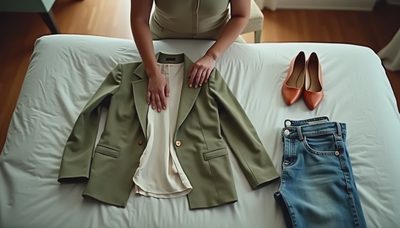
Lay the clothes out together before you cut tags. If one blouse only works with one pant, it is probably not pulling enough weight. If one shoe looks good but hurts by lunch, it is not a work shoe. If a jacket makes you sit differently, skip it. The easiest capsule is the one that already has outfits built in, so Monday morning feels like grabbing a uniform instead of solving a puzzle.
I like to keep one full outfit ready to go, usually on the front of the closet: blazer, top, bottom, shoes, and bag. That one habit saves me when the week gets noisy. Start with that, then build out from there. If you want help, take your current closet and find the pieces that already earn their keep. Keep those, replace the weak links, and stop buying for the life you think you should have. Good clothes, no drama.